
En bevisst live-podkast på pøbb
Det har blitt en fin tradisjon å samtale om de store temaene foran et publikum på Melkebaren i Sandnes med Jørg Arne Jørgensen og Markus Kvavik en gang i halvåret. Denne høsten var temaet bevissthet - og podkasten ligger ute nå:
Les også mer om bevissthet her:
Hvordan kan bevissthet eksistere?

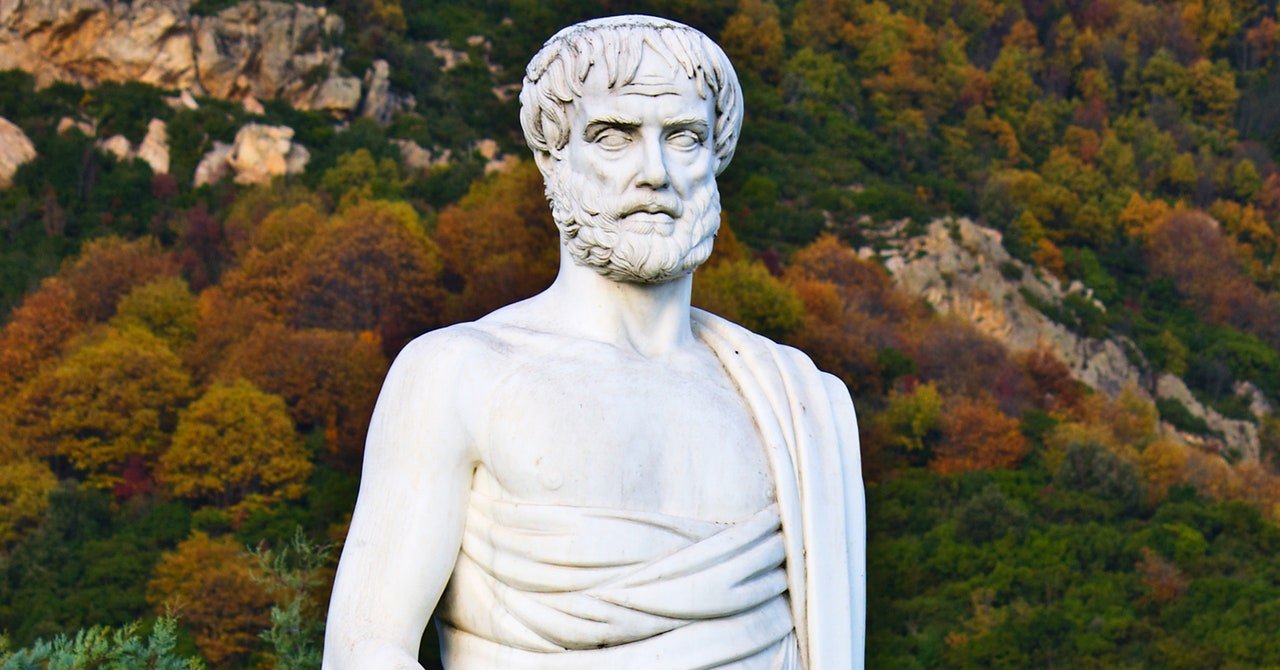
Why an evolutionist should be an Aristotelian
There is a widespread belief that the natural discoveries starting with Darwin contributed to the demise of the philosophy of Aristotle. But contrary to this perception, there are good reasons to think that core Aristotelian concepts are necessary to provide evolution with a rational foundation.
The historical person Aristotle needs little introduction. He was by all available accounts a polymath who brought mankind huge insights into fields ranging from ethics and metaphysics to logic, biology and physics. Just as his teacher Plato, He also gave birth to an entire tradition with a distinct way to philosophize, that were to dominate much of intellectual history.
What makes him even more interesting to our purposes, is that Aristotelianism is not merely an activity of rehashing what Aristotle would say, but a living tradition that includes thinkers who keep bringing his ideas to the marketplace and drawing out their logical implications, in live dialogue with new scientific discoveries, evolving political systems, and competing philosophical traditions.
There is little doubt that much of Aristotle’s physics and biology has since been shown to be erroneous and replaced by new insight, even if there have been some attempts to show that his physics were a good pre-scientific approximation to our current state of knowledge (Rovelli, 2015). However, its defenders argue, these outdated features can be disentangled from the fundamental pillars that make up Aristotelian metaphysics, which fits just as neatly together with the findings of modern science of today. Some defenders even argue that core Aristotelian axioms lies at the heart of any possible natural science (Feser, 2019), even though we may be unconscious of it, just as it does to any substantial ethics (Foot, 2001; MacIntyre, 2007).
Still, this preconception of Aristotelianism as scientifically antiquated, is probably a key reason for why many modern thinkers exclude it from their initial scope of viable alternatives. For this reason, we will start by having a look at some popular objections, to evaluate whether an Aristotelian framework is even a feasible option to move forth with.
Nevertheless, we could give many notable examples as to how there is a substantial and seemingly growing interest in an Aristotelian metaphysics, underlying natural philosophy and ethics alike (Cartwright, 1983; 2007; Ellis, 2002; Novák et al, 2012; Takho, 2012; Nagel, 2012; Groff & Greco, 2013; Novotny & Novák, 2013; Austin, 2018; Feser, 2019). Many core Aristotelian notions also crop up around in modern philosophy, though sometimes in revised terms. New theories, like powers ontology and systems biology, can be argued to borrow key features that fits well with them being true heirs of this ancient school of thought.
Here I will focus on concepts such as Aristotle’s four causes, where the often ignored formal and final cause will be central to our analysis. The attack of it being anti-scientific, usually on the grounds of it conflicting with the developments of evolutionary theory of the last centuries, is so widespread and so culturally influential that it is worth addressing. Many of the same elements of these responses could be included in a full-fledged response about its perceived incompatibility with findings in quantum mechanics, chemistry, neuroscience, optics, etc. As we shall see, the move away from Aristotelian ideas might not have come about as the conclusion of scientific findings at all, but could rather be attributed to historical accidents, along with the shifts in attitudes and areas of interest of the day.
Four causes to explain all things
If we are to introduce what makes Aristotelianism distinctive to other schools of thought, we would do wise in starting with the four causes. These lie at the bottom and implies other ideas associated with Aristotelianism, such as act-potency, essentialism, and teleology.
In Metaphysics (2006), Aristotle distinguishes four types of causes, the material, formal, efficient, and final. The material cause gives us the answer to that what out of which a thing is made. Here, Aristotle uses examples such as the bronze of a statue or the letters of a syllable. This is not sufficient, though, as all bronze is not included in statues, and letters can be used in other ways than in a syllable. So, we need to proceed to a formal cause, where we ask what this thing is, which is a structure, pattern, or arrangement of the material, enabling it the matter to have a certain set of properties. This explains why this accumulation of bronze is arranged statue-wise, when it could just as well be turned into a weapon or a piece of jewelry. These two, matter and form, together constitute hylomorphism, from hyle-, meaning matter, and -morphe, which is form. The indispensability of formal causation leads us to essentialism, which we will later recognize as core to an Aristotelian theory of human nature and moral knowledge, and which I argue below is consistent with even the findings of modern biology.
At this point, we probably want to know how this thing we encounter, whether a bronze statue or syllable, came to be. This gives us the efficient cause, that through which this thing was brought into being. A poet could be arranging the syllable, or an artisan could create the bronze statue, as they impose a new form on something that was previously qualitatively different. Last is the final cause. By this, we ask what about this thing is for, which gives us the answer of the end or purpose of a thing (Kenny, 2010; Feser, 2009a).
The end of the bronze statue be of an aesthetic kind, or to portray a leader in order to increase her or his standing, while the syllable can be part of a beautiful work of music, intended to communicate a story or create awe in the listener. These are humanmade artifacts, and therefore have intentions “imposed” on them from the outside. But as we shall see, this is the case even with natural substances, where intentionally is inherent to what it is.
With the observation that there is regularity occurring in nature, Aristotle understands that “when an event takes place always or for the most part, it is not accidental or by chance”, leads him to conclude that finality in that “it is plain then that nature is a cause, a cause that operates for a purpose” (1991, 199b25-26; 199b32).
Of course, there are many more questions that could be asked about a thing, to give us an even fuller explanation, such as how the lump of bronze came to be or the finality of bronze qua metal alloy, but all those would be further instances of investigating material, efficient, formal and final causes.
From the existence of final causation, we get teleology, which is also fundamental to understand ethics for an Aristotelian, through the possibility for natural goodness and human agency. Aquinas concludes: “The Philosopher proves (Phys. ii, 5) that ‘not only mind but also nature acts for an end. I answer that, Every agent, of necessity, acts for an end. For if, in a number of causes ordained to one another, the first be removed, the others must, of necessity, be removed also’” (1948, p. 584).
In one sense, there is a noteworthy difference between Aristotle’s use of the word cause to the modern notion of cause, the latter might sometimes be understood to denote something like relations between events. Therefore, some scholars have even rejected the translation of the Greek aitia into cause. Perhaps we can avoid some misconceptions if we rather speak about explanations or even becauses (Kenny, 2010). The point is that these four principles cumulatively are supposed to give an explanation as to what a thing is.
Aristotelianism and evolution
We knew much less about natural processes as Aristotle wrote his metaphysical treatises, than we do now. One charge against Aristotelianism is that the discovery of the theory of evolution has in particular rendered its worldview, standing on essentialist and teleological pillars, obsolete. Kuhse and Singer is one example. They write:
“Since Darwin, we know that we do not exist for any purpose, but are the result of natural selection operating on random mutations over millions of years. Hence there is no reason to believe that living according to nature will produce a harmonious society, let along the best possible state of affairs for human beings.”
(1999, p. 4).
Another prominent philosopher who shares this view, is the philosopher of mind John Searle. While discussing the need for some account of normativity to make sense of intentionality, he writes:
“(…) Darwin’s major contribution was precisely to remove purpose and teleology from evolution, and substitute for it purely natural forms of selection. Darwin’s account shows that the apparent teleology of biological processes is an illusion. (…) In short, the Darwinian mechanisms and even biological functions themselves are entirely devoid of purpose or teleology. All of the teleological features are entirely in the mind of the observer.”
(1992, p. 51-52)
If teleology of biological processes is apparent though illusional, we might ask what makes it apparent, and what makes it an illusion? As we soon shall see, if we depend to use terminology that imply teleology in describing biological processes for shorthand, we must be able to explain how these really can be traded with purely non-teleological language. If these are purely in the mind of the observer, we might ask why we still make use of them. This process of translation might not be as easy as we would like it to be.
Aristotle might not be the sole victim of Darwin’s discoveries. Daniel Dennett calls the discovery of natural selection for a “universal acid”, an idea that is a liquid “capable of cutting right to the heart of everything in sight” on a universal level, and with it obliterating the traditional concepts of pre-Darwinian philosophy (1995, p. 521).
How can an empirical theory achieve all of this? At this point, there is reasonable doubt as to whether these philosophical conclusions are warranted from the observations by themselves. We are in danger of not leaving evolution to be an empirical theory of how generations of biological organisms evolved with modifications, but quickly turn to make evolution into a cosmology on its own. In the words of Fran O’Rourke:
“Evolution is viewed by some, proponents and opponents alike, as a claim for total explanation, not only of how the living cosmos came to be, but also as an exhaustive account of its ultimate origins and final purpose- or absence thereof. Such a claim is tantamount to a metaphysics of total reality.”
(2004, p. 4)
If we refrain from the temptation to make a theory into a metaphysics, how might we then proceed to evaluate whether there is a conflict between our scientific state and Aristotelianism?
Essence in evolution
Essentialism can be defined as “the nature of a thing, whereby it is what it is”. This term arises from understanding a material thing as a substantial form – a composite of matter and form, where the form can be intellectually grasped to categorize it as one in a kind (Feser, 2013, p. 211).
The notion of a species seems initially to fit neatly with the concept of essence. When we in the animate realm discover several individuals that share a number of properties, it makes sense to characterize them all under one category. Still, the discovery of common descent with mutable species, evolving throughout generations with modifications by random mutations, might present a larger problem. The newfound knowledge that these species can also mutate, go extinct, and that entirely new species can come into existence, where there are groups of borderline individuals between one species and another, so-called vague examples, presents a problem for the essentialist, critics might say.
There are reasons to think that Aristotle himself would have thought the concept of a species to be a fixed and immutable one. If we are to believe the mountains of scientific data, we must conclude beyond reasonable doubt that this has since been refuted. However, as we are not only interested in what Aristotle would think, we can investigate whether these really are conclusions that follow from the principles he sketched out.
For there is prima facie little reason to believe that essentialism of an Aristotelian kind requires fixity of species, or for the set of existing species to be constant. The essentialist can be seen only to be committed to the claim that every species has an essence, whether evolving or not, so that there is a fact of the matter about the kind of species an organism is a member of, with a set of properties flowing from their nature (Feser, 2019).
Another objection to be put forward, is that there is in fact no set of traits common to every member in a given species. Even if most human beings are bipedal and have the capacity to develop the higher-order, abstractive skills of reasoning required for e.g., language, these are not universal capacities among our kind. Humans at an infant stage possess neither the ability to walk or reason. There are multiple examples of people born without legs or the ability to use them, or that lack the ability for language, due to accidents or genetic defects. Human beings come in all shapes and colors, without them losing their humanness because of this.
This objection is already anticipated by the distinction between the essence itself, its proper attributes, and its merely contingent attributes (Ibid). Even though we can learn about what proper attributes ordinarily flows from the essence of a healthy, mature individual of a species, it is fully possible for the development of even proper attributes to be at an early stage – and therefore merely potential - or interfered with, because of lack of nutrition, altered genetic material, irregularities during fetal development, etc. As human beings ordinarily have two legs and ability for sight, we would conclude that this belongs to the norm of a human being. That is why we would recognize it as a lack if a human being only had one leg or was without the ability for sight, rather than vice versa, with all bipedal, seeing human beings being the exceptional specimen to the species.
To use an example from Oderberg, we might even encounter a tiger without well-defined stripes. But as these tigers are usually almost universally characterized by being in bad health, with healthy tigers portraying distinct stripes, we have just the more reason to think that stripes are a proper attribute as understood about the essence of tigers (2007).
Contingent attributes on the other hand are not crucial to the species under investigation. Since color, height, width, etc, are not proper attributes of human beings, we can fully expect human beings to be either light-skinned or dark-skinned. Such facts do not alter our understanding of their humanness.
The fact remains that if the concept of a species is even intelligible, it needs an explanation as to how that could be. How can reality be in such a way, that we constantly rely on dividing it into species? Philosopher Michael Devitt states that “[M]any claims that biologists make day in and day out about the living world require species to have natures that they do not have according to this consensus”. (2008, p. 380).
Biologists still need to group together numbers of individual organisms according to common traits. They need to work in their field as if these groups held some common intrinsic nature, regardless of their views about essentialism as a whole.
Critics could possibly say that yes, they do in fact share common traits, but that is only because they are a vaguely defined group, close enough in hereditary lineage to represent a snapshot, chosen from a (in a cosmic perspective) infinitesimal portion of time, in the continually evolving total set of individuals. They might continue to say that these similarities could merely be understood as something like “clusters of covarying traits” (Okasha, 2002, p. 197), or even in terms of their relations rather than any postulated intrinsic nature, as in the “phylogenetic-cladistic” concept, which defines a species by its evolutionary history and therefore by reference of its relations to other (Feser, 2019).
But as Devitt again shows, making a genealogical point as to how an organism came to belong to a certain group. is still a different question from understanding what a species is, or even a subspecies or genus, so the phylogenetic-cladistic concept does little to address that problem (2008). Why the biological realm in the first place must be described as consisting of more than mere individuals, begs to be explained. Indeed, the mere existence of such clusters could be understood to coincide with the argument for essentialism, as to how that could be.
As for the objection of vagueness, where it is not always certain what kind we are to categorize an individual as, this could admittedly present a problem for the essentialist. However, we would still be hard-pressed to turn this observation into an argument to refute essentialism. To borrow an example from Sober, if we were to transmute a sample of lead into gold, there will be stages in the process where it would seem indeterminate whether the sample belonged to the element of lead or gold, or something else, but this remark by itself does not show that there is no fact of the matter about what the sample is. The perceived vagueness might be epistemic rather than ontological (Sober, 1993).
And there still remains the fact that pointing out that there are indeterminate cases, even seems to presuppose that there also exist determinate ones, which enables us to distinguish them from one another by recognizing the characterizes of the beforementioned one.
The importance of teleology
If the existence of final causes is a correct understanding of the workings of nature, we need to reconceptualize it in teleological terms, where normativity is in some sense inherent to the natural order. This has strong implications for human beings, and therefore for ethics, as we are also an integral part of nature, as we will return to. The main competitor for a teleological worldview is a mechanist one, which gained popularity in correlation with the development of the scientific methods. This mechanist model increased in popularity by ignoring the significance of such notions as the formal and final cause, that did not lend itself easy to the kind of explanations in mathematical terms that were emphasized with the new scientific approaches. What was left, was material and efficient causation.
This understanding of every agent as acting for an end, that originated well before Darwin, was criticized by Kuhse & Singer along with John Searle above. Philosopher of science Michael Ruse, who specializes in the philosophy of biology, would freely volunteer to join that club by reinforcing a common conception about the redundancy of final causes:
“Blind mechanical law can do everything. It is not so much that final-cause type understanding is now gone. Darwin himself happily talked about final causes and he certainly thought that this involved explaining in terms of the future, but that teleology is now subsumed under mechanism.”
(2016, p. 101).
Ruse could be criticized for his faulty mischaracterization of teleology as a “form of explanation that makes reference to causes that can be understood only in terms of the future” (Ibid, p. 101). Final causes are meant to fill an explanatory purpose here and now, regardless of concerns about the future. The current directedness of e.g., the sulfur of a match towards the effect of fire, should not be confused with any dependency that this potential will ever be actualized, but would hold even if the match were to be immersed into water or decomposed. Indeed, the directedness of a substance towards the actualization of certain potentials is a way to make sense of the regularity of causal dispositions wholesale, that have been revitalized in recent times in the terminology of powers (Anjum and Mumford, 2015).
This point needs no fleshing out right now. Examples of dismissive comments like these could be multiplied in large numbers, some high in precision, while others are less relevant. The importance of this shift away from finality should not be neglected. The historical abandonment of final causes could be said to have great implications. Philosopher William Stace, himself no friend of Aristotelians, thought it single-handedly to result in nothing less than moral relativity, the individualization of morality and loss of belief in free will. Writing for The Atlantic, he provided an analysis of the state of man up to the current day in 1948.
“’final causes’ (…) [or] cosmic purposes (…) [belief in which] was not the invention of Christianity [but] was basic to the whole of Western civilization, whether in the ancient pagan world or in Christendom, from the time of Socrates to the rise of science in the seventeenth century. [Galilei, Kepler and Newton] took the revolutionary step of consciously and deliberately expelling the idea of purpose as controlling nature from their new science of nature.
They did this on the ground that inquiry into purposes is useless for what science aims at: namely, the prediction and control of events (…) This, though silent and almost unnoticed, was the greatest revolution in human history, far outweighing in importance any of the political revolutions whose thunder has reverberated through the world. (…) The world, according to this new picture, is purposeless, senseless, meaningless. Nature is nothing but matter in motion. The motions of matter are governed, not by any purpose, but by blind forces and laws.”
(p. 2-3)
Stace characterized this shift, the banishment of teleology and the rise of causal determinism, as the “greatest revolution”, a revolution that went by mostly unnoticed, and even well preceded Darwin. But he also significantly thought this shift to be understood not as the result from any finding of science, but rather a shift in general attitude. The resulting change in outlook for a man without finality was stark. He continues:
“If the scheme of things is purposeless and meaningless, then the life of man is purposeless and meaningless too. Everything is futile, all effort is in the end worthless. A man may, of course, still pursue disconnected ends, money, fame, art, science, and may gain pleasure from them. But his life is hollow at the center. Hence, the dissatisfied, disillusioned, restless, spirit of modern man.
(…) If our moral rules do not proceed from something outside us in the nature of the universe – whether we say it is God or simply the universe itself – then they must be our own inventions. Thus it came to be believed that moral rules must be merely an expression of our own likes and dislikes. But likes and dislikes are notoriously variable. What pleases one man, people, or culture displeases another. Therefore morals are wholly relative.”
(Ibid, p. 3-4)
Whether Stace was entirely correct, remains an open question. But this gives us reason to investigate whether final causes might be worth looking in to, along with the idea to suspect that Darwin might be innocent for their demise in most parts of modern philosophy.
Teleology through evolution
As recently noted, the abandonment of final causes might have little to do with Darwin. Still, there is a widespread conception that any belief about purposes in nature was undermined by the discovery of natural selection, reducing the status of these purposes from real to mere apparent. The idea seems to be that for whatever explanatory power these final causes were meant to have, the same job could be done more elegant and simpler solely with the conjunction of random mutations with vast amounts of iterations through time.
Jerry Fodor and Massimo Piattelli-Palmarini (2011) argues that the explanatory power of these replacement theories might not be that large after all. They give an argument for why an explanation solely in terms of exogeneous factors in natural selection, is insufficient. They liken this to the “black box” of Skinner’s behaviorist model of human psychology, a theory that argues that behavior can be viewed in terms of a set of inputs of behavioral traits, along with reinforcements, which will result in a set of outputs of behavioral traits at a later stage. They note several parallels to the mechanist explanations of natural selection, with input of phenotypic attributes to a population of organisms and their environmental circumstances, which is supposed to give a sufficient explanation for its outputs. In particular, they highlight an indeterminacy problem.
While attempting to explain why frogs evolve to have accurate representational content of bugs, the mechanist might want to stress the importance of counterfactuals. Namely, that the ancestors of the current frog who developed the right kind of causal connections between perceptions of bugs with the response mechanisms for catching those bugs, were favored for by natural selection. But this analysis makes no explanation as to why this representational content should be determinately understood as bugs, rather than just some generic content, like small, moving things.
To borrow one of their other examples, imagine the selection process included in a trait T, that contributes to the fitness of the organism, such as the heart efficiently pumping blood to the varying parts of the body. Now, also consider a trait T’, that is intimately correlated with T, but has the downside of not being a contributive factor to the fitness of the organism, such as a steady beating noise. From the point of view of natural selection alone, both T and T’ will be correlated with fitness, since T per se is correlated with fitness, and T’ is correlated with T.
With the indeterminacy problem, Fodor and Piatelli-Palmarini argues, we have no available options to explain why natural selection can be viewed as selecting for bugs or T, instead of little moving things and T’. We might say that recognizing bugs or efficiently pumping blood is directly correlated with the fitness of their organisms, whereas moving things and beating noises does not. Where we could understand that T would contribute to the fitness of the organism, even without T’, then T’ could never provide fitness without T.
However, that is an explanation that makes sense to us, since we are able to perform a post hoc analysis of them, already presupposing our ability to grasp their semantic content. We need the added information of knowing what makes it the case that e.g., T contributes to fitness whereas T’ does not. But natural selection does not have this luxury. It is not a process that is supposed to be in the business of semantics. And it can even less be capable of selecting between alternatives in accordance with such information, as it is purported to be an entirely “mindless process”, inhabiting no aspects of agency.
Fodor and Piatelli-Palmarini think that Darwin himself, when he famously likened the process of natural selection to selective breeding in On the Origin of Species, engaged in the same kind of category error (Darwin, 2011). Selective breeding is motivated by agency, with human beings that possess intentionality, and can desire to select for an attractive set of properties, as opposed to another. But we are told that nothing similar occurs in nature (Fodor & Piatelli-Palmarini, 2011).
Even with varying attempts as to endow nature with something akin to agency or mental properties, by describing the outcomes of natural selection as what “Mother Nature” intended (Dennett, 1995), by the seeming design of a “blind watchmaker” (Dawkins, 1987), or how they are driven by “selfish genes” (Dawkins, 1989), these are all anthropomorphized metaphors that are invoked in an attempt to bridge this gap. But metaphors are famously inert fictions, until we have a satisfying explanation as to what they are metaphors for. As Fodor and Piattelli-Palmerini humorously summarize these attempts, in that “fictions can’t select things, however hard they try. Nothing cramps one’s causal powers like not existing.” (2011, p. 121)
More objections are given against their claim, trying to find a way around the need to attribute some notion of intentionality to the selection mechanism. One objection that might occur natural to us, is the proposal that if attributes such as T instead of T’ is linked to reproductive success, then that alone will suffice to show that T will be selected for (Godfrey-Smith, 2010; Sober, 2010). Fodor and Piattelli’s response were to say that this assumes what should be proven, as it just stipulates as true by definition that the trait T that will cause increased fitness, also is the one that corresponds to the one being selected for (2011).
Another objection by courtesy of Alex Rosenberg, is that natural selection does not need a notion of “selection for” but only “selection against” (2013). His point is that the selection mechanism does not need to affirm the positive, as long as it eliminates the negative. Fodor in a later interview responds by saying that this response is irrelevant, as it does nothing to solve the problem:
“Since it is tautological that there can’t be selection for/against a neutral trait, it follows that, if there is selection at all, then it is selection for a trait iff it isn’t selection against it. Still, let’s assume, for the sake of argument that whiteness wasn’t selected for in polar bears. What, in that case, was selected against? Being pink? Being green with orange stripes? Do Darwinists believe that there used to be green polar bears with orange stripes, but they all got eaten up by predators? If not, what does Alex think is gained by rejecting selection for in favour of selection against?” (Marshall, 2012).
The purpose of these arguments is notedly not to give any doubts about the legitimacy of the theory of evolution itself, but to highlight the need to include endogenous factors as part of our analysis, which shows why it might be worth reintroducing notions from Aristotle’s toolbox. This gives us room, not only to highlight the importance of formal causation, but also the final causation accompanying it. James Lennox gives us a diametrically opposed view of selection to the staunch mechanists attacked by Fodor and Piattelli-Palmerini above:
“Selection explanations are inherently teleological, in the sense that a value consequence (Darwin most often uses the term ‘advantage’) of a trait explains its increase, or presence, in a population.”
(1993, p. 410)
“Darwin essentially re-invented teleology. (…) The concept of selection permits the extension of the teleology of domestic breeding into the natural domain, without the need of conscious design. As in domestic selection, the good served by a variation continues to be causally relevant to its increasing frequency, or continued presence, in a population – but the causal mechanism, and the locus of goodness, shifts."
(Ibid, p. 417)
David Depew elaborates upon how a tendency to select for advantageous traits, such as T over T’, can be understood as intrinsic to evolution itself, where the evolutionary process inhabits directedness towards ends, and how this fits with Darwin’s theory.
“Proper final causality is causality that runs through a process whose constituent moments, to the extent that something does not interfere, emerge as they do because they have a a good effect – as in the case of the eye (…) [In] Aristotle’s technical terms Darwinian adaptations do have properly final causes. They reliably have certain effects and they come to be precisely because they have these good effects."
(2015, p. 126).
This shows that teleology, far from being banished by Darwin, might even be a candidate to solve contemporary issues, such as providing solution for how to make sense of species and the “selection for”-problem. Rather than Darwin’s theory undermining teleology, it could in fact turn out to be presupposing teleology instead, that is even more in line with Darwin’s own descriptions. Indeed, some philosophers go far in the direction of arguing that in order to be a Darwinian, you ought to be an Aristotelian (Gilson, 1984; Lennox, 1993; Feser, 2019).
We could highlight plenty more examples in an attempt to show that we might need to presuppose some notion of teleology, not only to make sense of human action, as discussed in chapter 5, but among processes within the entirety of the animate realm. We can observe that plants grow roots in order for theconsumption of nutrition, gazelles jump in order for the signaling of predators, hearts function in order for the pumping of blood around the vessels of the body, eyeballs work in order for sight. We might grow suspicious only by the fact that we can insert a term such as “in order for” consistently to describe the workings of the biological world, a term that bears resemblance to the physical intentionality or purposiveness that characterizes teleology.
Biologists often help themselves to such language. Although, as David Stove notes, such terminology must come “with an invisible promissory note attached (…) saying something like ‘’To be cashed at a later date in non-teleological terms’” (1995, p. 279). As seen above, this cashing out is not always a straight-forward procedure. There are even questions to be had about whether it is possible at all.
Stove concludes that many of these biologists have “issued so many of these promissory notes, that [they are] no longer conscious of their existence” (Ibid, p. 279) and have “simply forgotten what teleological words mean, or else forgotten the fact that they are not really available to Darwinians engaged in explaining adaptations” (Ibid, p. 279). If many of the experts of biology have similar misconceptions about finality as Michael Ruse, there might be something to this.
We might even proceed to highlight one of the grandest discoveries of modern age, which is the human genome. Biophysicist and Nobel laureate Max Delbrück wrote, that if the Swedish committee handing out the Nobel Prize “had the liberty of giving awards posthumously, I think they should consider Aristotle for the discovery of the principle implied in DNA. (…) I should like to suggest, furthermore, that the reason for the lack of appreciation, among scientists, of Aristotle’s scheme lies in our having been blinded for 300 years by the Newtonian view of the world” (1971, p. 54-55).
The point would be that a DNA embodies the organism with informational content, almost like a formal cause, that displays a certain directedness towards the structure, development and ends for that being.
In these sections, I have tried to establish that although a popular move, it should not be viewed as sufficient to point to the development of evolutionary theory in order to strike a fatal blow to the Aristotelian project. The empirically available data for evolutionary theory could still be understood as distinct from the metaphysical baggage that Singer, Searle, Dawkins, Dennett, and other prominent philosophers want to endow it with.
There is still a live discussion to be had about what kind of framework provides the philosophy of biology with the best metaphysical apparatus moving forward. That is not a discussion for this paper, where we will proceed to focus on matters particularly relevant to ethics. Before we can do that, we need to address some last popular objections to the possibility of an Aristotelian ethics.
The naturalistic fallacy objection
That the elimination of final causes was to produce a skeptic like Hume, might come as no surprise. Efficient causality, isolated from final causality, the Aristotelian would argue, itself becomes mysterious, as it provides the intelligibility for why causes tend towards their distinct effects. He argued that there is nothing in the concept of as cause, that gives us inherent reason to believe that it will produce a certain type of effect.
The naturalistic fallacy was itself coined by G. E. Moore (1903), in the remark that goodness cannot be a natural property, although the same line of thought, that there is a fundamental logical distinction between description and prescription, between fact and value, or an ought and an is, is usually associated with David Hume:
“In every system of morality, which I have hitherto met with, I have always remarked, that the author proceeds for some time in the ordinary way of reasoning, and establishes the being of a God, or makes observations concerning human affairs; when of a sudden I am surprised to find, that instead of the usual copulations of propositions, is, and is not, I meet with no proposition that is not connected with an ought, or an ought not. This change is imperceptible; but is, however, of the last consequence. For as this ought, or ought not, expresses some new relation or affirmation, 'tis necessary that (...) a reason should be given, for what seems altogether inconceivable, how this new relation can be a deduction from the others, which are entirely different from it” (2017, p. 241).
This argument trades on the logical rule that you cannot insert anything into a conclusion, that was not present in the premises, has become an influential objection to the very possibility of a teleologically based ethics, and if it is successful, then such an ethics never get off the ground.
As Magelssen (2014, p. 70) points out, the proponent of teleology has at least three strategies to respond to this. First, he can attempt to show that what was purported to be a purely factual description already contains normativity. Second, he can deny that the fact/value-distinction can be cogently made. Third, by adopting the whole natural philosophy of the Aristotelian, that already contains essences and final causes, they can show that there is no fallacy involved in moving from an is to an ought.
Ralph McInerny (1980) tries to invalidate the naturalistic fallacy objection by giving counterexamples such as:
P1: Joe weighs two hundred and fifty pounds.
P2: It is not healthy to be overweight.
C: Therefore, Joe ought to go on a diet.
At first glance, one could argue that from a purely logical point of view, this argument is not valid as it stands, as the conclusion does not follow from the premises. McInerny responds that the second premise should be understand as an action-guiding value-premise. But even then, we can ask about how that entails the conclusion.
Either McInerny can proceed by attempting to show something like the term “healthy” already has implicit normativity embedded, or that Joe’s directedness towards his health, as a core ingredient of human flourishing, is already “built in” to our understanding of the natural order, or even that a missing premise can be inferred as “Joe ought to pursue his health”. If the latter, the natural follow-up question of the sort of why “Joe ought to pursue his health”, then this would demand for further premises, perhaps continuing ad infinitum.
However, if normativity is “built in” to the order of nature, such as the proponent of teleology suggests, it can be understood as a first principle. If successful, that enables us to embed it into premises without the need to rely on further premises. At the very bottom of such a natural order, there is no sharp distinction between fact and value since the proposition “all things act towards an end” is naturally followed by “all things ought to act towards an end”. In the next chapter we will turn to the question of whether ethics can be based on actual knowledge, more specifically whether we can learn about goodness from observing the order of nature. If this is at all possible, Hume’s dichotomy seems to break down, as nothing new is introduced in conclusion that was not latently present in the premises.
David Oderberg opts for something more akin to Magelssen’s first and second alternative, by arguing that Hume’s conclusion presupposes that we subscribe to his empiricist epistemology, where the only thing that could count as facts are “observable elements of concrete reality” (Oderberg, 2000, p. 11). Of course, if we presuppose that all facts need to be observable elements of empirical reality and require that moral facts need to oblige to our view, even though it only allows for a merely descriptive explanation, then moral facts are excluded from the outset.
But then, the empiricist has also begged the question in assuming that his basic approach to epistemology is a correct one. Oderberg proposes the more neutral alternative of describing facts as true propositions, where facts are that to which propositions correspond. Then we can allow for the possibility for value-laden propositions to be true, such as “Joe ought to pursue health”, even though this could never be inferred from a description purely based on “observable elements of concrete reality”.
This distinction need not remove us from relying on empirical reality. On the contrary, it provides a wider range of options for how to describe it. Philippa Foot (2001) uses similar examples to show that there is no neat distinction between fact and value, proposing that it is impossible to learn about the nature of plants, animals or human beings, without at the very same time learning about conditions for what constitutes goods for these organisms.
We can observe a plant and conclude that it is better for it to have access for pure water and sunrays, rather than being placed in a basement and served whiskey. In the same manner, we can study the muscle structure, indigestion system, claws and teeth of lions, and conclude that they inhabit a directedness qua lion towards being a predator, rather than being put in small pastures and being fed the diet of an oxen. In a similar fashion, studying the functions of a heart might inform us about something regarding its normativity, along with the ability to distinguish between the importance of its ability to pump blood for the fitness of an organism, as opposed to just making noises, which teaches us about how this trait was selected for during evolution. The naturalistic fallacy quickly forces our attention to underlying matters of ontology and epistemology, but where there are several options available to respond to the naturalistic fallacy, where one or multiple can be open to us.
References
Anjum, R. L. & Mumford, S. (2015). Getting Causes from Powers. Oxford: Oxford University Press.
Aquinas, T. (1948). Summa Theologica. Translated by Fathers of the English Dominican Province. New York: Benziger Bros.
Aristotle. (1991). The Complete Works of Aristotle: Physics. Translated by J. Barnes. New Jersey: Princeton University Press.
Aristotle. (2016). Metaphysics. Translated by W. D. Ross. Createspace Independent Publishing Platform.
Austin, C. J. (2018). Essense in the Age of Evolution: A New Theory of Natural Kinds. London: Routledge.
Cartwright, N. (1983). How the Laws of Physics Lie. Oxford: Oxford University Press.
Cartwright, N. (2007). Causal powers: what are they? why do we need them? what can be done with them and what cannot?. Contingency and Dissent in Science, (07).
Darwin, C. (2011). On the Origin of Species. Edited by A. M. Goldstein. The American Museum of National History. Retrieved from http://darwin.amnh.org/files/images/pdfs/e83461.pdf
Dennett, D. (1995). Darwin’s Dangerous Idea. Simon and Schuster: New York.
Devitt, M. (2008). Resurrecting Biological Essentialism, Philosophy of Science, 75, 344-382.
Ellis, B. (2002). The Philosophy of Nature: A Guide to the New Essentialism. Chesham: Acumen.
Feser, E. (2009a). Aquinas. London. Oneworld Publications.
Feser, E. (2014). Scholastic Metaphysics: A Contemporary Introduction. Heusenstamm: Editiones Scholasticae.
Feser, E. (2019). Aristotle’s Revenge: The Metaphysical Foundations of Physical and Biological Science. Heusenstamm: Editiones Scholasticae.
Fodor, J., & Piattelli-Palmarini, M. (2011). What Darwin Got Wrong. New York: Picador.
Foot, P. (2001). Natural Goodness. Oxford: Oxford University Press.
Gilson, E. (1984). From Aristotle to Darwin and Back Again. London: Sheed and Ward.
Kenny, A. (2010). A New History of Western Philosophy. Oxford: Oxford University Press.
Lennox, J. (1993). Darwin was a Teleologist. Biology and Philosophy. Biology and Philosophy, 8, 409-421.
MacIntyre, A. (2007). After Virtue, 3rd ed. Notre Dame, Indiana: University of Notre Dame Press.
Marshall, R. (2012). Meaningful Words Without Sense, & Other Revolutions. 3:AM Magazine. Retrieved from https://3quarksdaily.com/3quarksdaily/2012/11/meaningful-words-without-sense-other-revolutions.html
Novák, L., Novotný, D., Sousedik, D., & Svoboda, D. (Eds). (2012). Metaphysics: Aristotelian, Scholastic, Analytics. Frankfurt: Ontos Verlag.
Oderberg, D. (2000). Moral Theory: A Non-Consequentialist Approach, 2nd ed. Oxford: Blackwell Publishing.
Oderberg, D. (2007). Real Essentialism. London: Routledge.
Okasha, S. (2002). Darwinian Metaphysics: Species and the Question of Essentialism, Synthese 131, 191-213.
Rosenberg, A. (2013). How Jerry Fodor Slid Down the Slippery Slope to Anti-Darwinism, and How We Can Avoid the Same Fate. European Journal for Philosophy of Science, 3, 1-17.
Rovelli, C. (2015). Aristotle’s Physics: A Physicist’s look. Journal of the American Philosophical Association, 1, 23-40.
Ruse, M. (2016). Evolutionary biology and the question of teleology. Studies in History and Philosophy of Biological and Biomedical Sciences, 58, 100-106.
Searle, J. (1992). The Rediscovery of the Mind. Cambridge, MA: MIT Press.
Sober, E. (2010). Natural Selection, Causality, and Laws: What Fodor and Piattelli-Palmarini Got Wrong. Philosophy of Science 77, 594-607.
Stace, W. (1948). Man Against Darkness. The Atlantic Monthly, v. 182(3).
Takho, T. (Ed.). (2012). Contemporary Aristotelian Metaphysics. Cambridge: Cambridge University Press.

Hvem sin selvbestemmelse? Hvilken autonomi?
En av mine kjepphester, som også er en kjepphest hos en favoritt, Alasdair MacIntyre, er at det er langt vanskeligere å diskutere etikk i vår moderne verden enn vi liker å tro. Det er fordi vårt «etiske språk» har blitt drastisk utvannet, og vi ofte kommer fra radikalt ulike virkelighetsforståelser, hvor det er lite rom for overlapp hvor reelt konstruktive diskusjoner kan foregå. Men det å skjule dette, er heller ikke noe godt alternativ. Da ender vi bare opp med skinnenighet, som vil bryte sammen første gang våre etiske teorier blir satt på prøve.
Vi liker gjerne å tro at etikk er en øvelse hvor rasjonelle mennesker vil komme til enighet, om de bare kommer sammen, klargjør definisjoner, og maler ut prinsippene i henhold til visse logiske regler, slik som at dersom X er bedre enn Y, burde vi foretrekke mer av X fremfor mer av Y.
Noen har tatt dette fullt ut, slik som utilitarister, en form for konsekvensetikk, som lever i en fantasi om at alle etisk relevante størrelser kan reduseres ned til en felles «valuta», hvor vi kan regne og måle, og komme frem til at mer er bedre enn mindre.
Men så enkelt er det ikke (og ingen rasjonelle mennesker burde være en konsekvensetiker i noen meningsfull forstand). For selv ordene vi bruker i etisk diskusjon, som vi trodde vi forsto betydningen av, er ladd med tung metafysisk bagasje hele veien ned. Et eksempel på et slikt ord, er autonomi - et «pop-ord» som brukes hyppig i alle etiske og politiske journaler. Men hva autonomi egentlig betyr, er langt mer problematisk enn vi tror. Jeg håper jeg får frem det bedre i dette utdraget fra mitt kapittel i den nylanserte boka «Dødshjelp i Norden». (Les hele kapittelet her.)
Hvilken autonomi?
Det er unødvendig å overbevise moderne vestlige mennesker om at selvbestemmelse er et gode for en voksen person. Det har blitt et sentralt premiss i vår kultur. Men hvordan forstår vi, med våre nedarvede forestillinger, ord som autonomi og selvbestemmelse? Og hvor selvfølgelig er vår kulturelt betingede forståelse av dem?
Vi anser det som et gode at vi i stor grad selv kan ta avgjørelser om ting som er viktige for livene våre. Moderne politisk liberalisme er fundert på ideen om at rasjonelle mennesker kan ha velbegrunnede, rivaliserende oppfatninger om hva som er et gode, og at de derfor i størst mulig grad burde overlates til å ta slike beslutninger på egen hånd. Staten og andre institusjoner skal ikke være overformyndere. Vi ønsker altså å være autonome til å forme vår egen vei i livet, i samsvar med våre egne oppfatninger om det gode liv.
Men hva vil det si at et menneske utøver autonomi? Vårt moderne konsept om autonomi stammer fra den tyske 1700-tallsfilosofen Immanuel Kant, som kalte autonomi for «det suverene prinsippet for moral» (Copleston, 1994, s. 329-330). Men måten vi benytter begrepet på i dag, er langt fra Kants opprinnelige filosofi. Mellom Kant og oss, er det sterkt preget av et par hundre år med konkurrerende filosofiske retninger. Kants opprinnelige prosjekt var å forsøke å reetablere en universell standard for hva et gode er og for hva som utgjør gode handlinger for mennesket. Den dominerende aristoteliske etikken hadde hatt denne funksjonen, men var på Kants tid gått av moten blant store deler av den vestlige intelligentsiaen.
Autonomi som selvlovgivning
Kant foreslo at om vi skal være moralsk ansvarlige, må vi være moralsk autonome. Våre handlinger kan ikke vurderes etisk dersom vi bare lever opp til andre menneskers formeninger. Derfor må vi være selvlovgivere (Kant, 1993; Copleston, 1994). Men på samme tid er det ikke vilkårlig hvilke lover vi holder oss selv ansvarlige overfor. Viljen vår, som praktisk fornuft, kan aldri betraktes som uavhengig fra vår evne til rasjonalitet (Kant, 1993, s. 23). Ikke ethvert valg kan bli godt, bare fordi vi ønsker det. Men som rasjonelle vesener, må valgene våre sees i lys av en rasjonelt tilgjengelig morallov.
Hva som følger fra denne moralloven, er dypest sett universelt tilgjengelig kunnskap, hevdet Kant. Men denne må vi identifisere selv, og i den forstand er vi derfor autonome. Det er noe alle mennesker til alle tider kunne komme frem til, om de stilte seg de riktige spørsmålene. Dette ledet Kant frem til innflytelsesrike ideer, slik som de kategoriske imperativene, ubetinget gyldige lover for alle fornuftsvesener (Copleston, 1994).
Kant mente dessuten at selvmord, og derfor også dødshjelp, aldri kunne forsvares, siden det var irrasjonelt å ønske sin egen ikke-eksistens. Det brøt med de kategoriske imperativene, siden eksistens er den absolutte forutsetningen for ethvert oppnåelig gode for en person (Kenny, 2006).
Et århundre etter, dukket landsmannen Friedrich Nietzsche opp. Han stilte et naturlig spørsmål i møte med Kants påstand: «Hvorfor tro på en slik morallov?» Nietzsche hevdet at virkeligheten ikke kommer med slike fiks ferdige morallover. Vi må kaste av oss begrensningene av å være lenket til de tradisjonelle moralsystemene, som utelukkende var menneskeskapte, utviklet i troen på at det eksisterte noe slikt som en morallov, med gitte standarder for hva som var godt og ondt, bedre og verre. Bare da kan vi bli frie, mente Nietzsche, når vi kan skape oss selv, omfavne livskraften og det virkelige menneskelige. Vi må snarere forsøke å leve i en slags kunstnerisk utfoldelse av det fulle spekteret av våre evner.
Til forskjell fra Kant, betraktet Nietzsche viljen vår løsrevet fra påstanden om at vi er fornuftsvesener som vurderer i henhold til gitte etiske kategorier. Det er verdt å merke seg at Nietzsche karakteriserer selvmordet i langt mer positive ordelag enn Kant:
Den syke er en parasitt på samfunnet. I en viss forstand er det uanstendig å leve videre. (…) Å dø på en stolt måte, når det ikke lenger er mulig å leve på en stolt måte. Døden, valgt av egen fri vilje, døden til rett tid, med klarhet og glede, fullendt blant barn og avkom: slik at en virkelig avskjed fortsatt er mulig, hvor den som tar avskjed, fortsatt er der, likeledes en virkelig vurdering av det oppnådde og villede, en oppsummering av livet. (2008, s. 81).
Frihet uten natur
En siste tenker verdt å trekke frem, nærmere vår egen tid, er den franske eksistensialisten Jean-Paul Sartre. Vi kan velge fritt, mente Sartre, men bare på grunn av at eksistens er forut for essens. Mens Aristoteles hadde hevdet at mennesket har en gitt natur (essens), som er bestemmende for hva som vil være rasjonelle og gode valg for et individ av vår art, påsto Sartre at dette ikke kan være sant. For at mennesket skal kunne være fritt, må vi først og fremst være skapere av vår egen essens. Vi bestemmer selv, også hva vi skal være, kontinuerlig (Sartre, 1946).
Sartre har altså radikalt forlatt Kants opprinnelige forståelse av autonomi, både som det å velge som et individ som innehar en natur som fornuftsvesen, og at vi handler i tråd med en rasjonell morallov. Personen som velger, ifølge Sartre, vil gjennom valget skape seg selv, og derved også fasiten om hva som er et godt valg for vedkommende.
Når vi eksempelvis i dødshjelpsdebatten foreslår at autonomi skal være et rådende prinsipp, er betydningen av dette altså fullstendig avhengig av hvilket autonomikonsept vi har i tankene. Om vi tenker på Kants autonomi, må det autonome valget alltid sammenholdes med en rasjonell standard (moralloven). Den avgjørende autoriteten for valget ligger etannet sted enn i menneskeviljen selv. Men det vi ofte har i tankene når vi snakker om «autonomi» i vår kultur, er formet mer av arven fra Nietzsche og Sartre, hvor autoriteten ligger hos oss alene. For et slikt autonomibegrep, er det sentrale at det er vi som velger – ikke hva vi velger. Men hva er konsekvensen om vi utformer en dødshjelpslov på det prinsippet?
Om denne versjonen av autonomiveien følges, får valget altså all nødvendig autoritet fra det enkle kriteriet av at det tilhører subjektet selv. Vi andre kan ikke bedømme valget ut fra kriterier om hvorvidt valget er godt, bedre, rasjonelt, eller noe lignende, selv om valget er å ta ens eget liv.
For en dødshjelpslov som tar et slikt autonomiprinsipp fullt ut på alvor, blir mange foreslåtte betingelser, slik som at personen må være terminalt syk eller oppleve uutholdelig lidelse, straks uholdbare begrensninger for utøvelsen av autonomi. Vi som medmennesker kan ikke uten videre tvinges til å hjelpe vedkommende i å utføre dette, men det er heller lite som hindrer oss fra å hjelpe til. Dersom det å hjelpe personen å ta sitt eget liv samsvarer med hva vi ønsker å gjøre, utøver vi likedan bare vår autonomi. Loven burde ikke ha noen autoritet til å gripe inn for å hindre eller begrense dette.
Nordiske dødshjelpstilhengere flest vil forståelig nok finne en slik lov lite attraktiv, men da bør de samtidig innrømme at de lar andre hensyn overstyre prinsippet om respekt for personens selvbestemmelse. Da er det et annet prinsipp som dypest sett begrunner, og setter grenser for, tilbudet om dødshjelp.
Referanser
Copleston, F. (1994). A History of Philosophy Volume VI. New York: Doubleday.
Kant, I. (1993). Grounding for the Metaphysics of Morals. Indianapolis: Hackett.
Kenny, A. (2006). A New History of Western Philosophy, Vol 3. New York: Oxford University Press.
Nietzsche, F. (2008). Avgudenes ragnarok – eller hvordan man filosoferer med hammeren. Oslo: Spartacus Forlag.
Sartre, J-P. (2007). Existentialism is a Humanism. New Haven: Yale University Press.
Naturvitenskapelige grunner til å ikke tro på oppstandelsen
Mange av oss må holde oss hjemme i disse dager, så da kunne jeg like godt kjøre en livestream om et relevant tema akkurat i disse påsketider: På hvilken måte kunnskapen fra moderne naturvitenskap sår tvil om at Jesus faktisk sto opp fra de døde.
Jeg tror jeg har dekket de fleste grunnene, men gjerne legg til punkter om jeg har glemt noe.

Klimaendringer som fysisk og moralsk krise
Det er krise nå. Skikkelig krise. Det er ikke «en utfordring», ikke «et problem», men en fysisk, økologisk, sosial, økonomisk, politisk og – fremfor alt – moralsk krise. Tre tiår har gått siden menneskeskapte klimaendringer fikk politisk oppmerksomhet. Nå er det på høy tid vi tar inn over oss alvoret.
Gjesteinnlegg av Anders Kvellestad, partikkelfysiker.
Klimakrisen endrer naturen fra toppen av atmosfæren til havets bunn. Den påvirker selve de naturlige rammene for samfunnet vårt – alt fra næringsinnholdet i salat, til hvorvidt Shanghai vil forsvinne under bølgene. Og den er nært forbundet med den pågående økologiske krisen, med tap av planter, dyr og insekter i et tempo menneskeheten aldri før har sett.
Men i møte med klimakrisens omfang og kompleksitet er det fristende å stikke hodet i sanden. Som pave Frans skriver i Laudato Si fra 2015:
As often occurs in periods of deep crisis which require bold decisions, we are tempted to think that what is happening is not entirely clear. […] Such evasiveness serves as a licence to carrying on with our present lifestyles and models of production and consumption.
Derfor kan det være nyttig å ta et steg tilbake og minne oss selv på hva det underliggende fysiske problemet egentlig er. Nå er ikke jeg klimaforsker, men dette problemet er heldigvis så enkelt at selv en partikkelfysiker kan forstå det: jordens energi er ute av balanse. Ikke på en sånn New Age-aktig «jeg kjenner en ubalanse i energien»-måte – nei, helt bokstavelig: jordens totale energiregnskap går i pluss, og det er ikke en god ting.
Se for deg jorden sett fra månen. En liten blåaktig klump omgitt og isolert av verdensrommets vakuum. Når du er en liten klump i vakuum er det hovedsakelig én måte du kan motta og avgi energi: gjennom stråling. Jorden får energi ved å absorbere innkommende solstråling, og avgir energi som varmestråling til verdensrommet. Så lenge energi absorberes og stråles ut i like stort tempo vil jordens temperatur og klima over tid forbli stabilt.
Men slik er det ikke for jorden nå. På toppen av jordens atmosfære er nå differansen mellom absorbert og utstrålt effekt i snitt ca. 0,7 Watt per kvadratmeter. Altså, for hver kvadratmeter akkumuleres en netto energimengde på 0,7 Joule per sekund. Høyere lufttemperatur, varmere hav og økt issmelting, og de dramatiske følgene av dette, er ulike måter denne økende mengden «overskuddsenergi» kommer til uttrykk i klimasystemet. Nøyaktig hvordan dette utspiller seg er kompliserte spørsmål for klimaforskningen. Men i bunn ligger altså en sammenheng så enkel at vi alle kan forstå den: når et system tar opp energi raskere enn det avgir energi, vil den totale energimengden i systemet øke. Det får konsekvenser.
Det er her den fysiske krisen blir en moralsk krise: Vi vet det er våre utslipp av drivhusgasser som gjør atmosfæren stadig mindre «gjennomsiktig» for jordens varmestråling, og slik øker ubalansen i energiregnskapet. Vi kjenner konsekvensene dette har for oss selv, våre medmennesker og naturen. Og likevel har vi så langt kollektivt stukket hodet i sanden.
Klima- og miljøkrisen er en moralsk krise på systemnivå, på samme måte som slaveri og rasisme. De radikale samfunnsendringene vi nå trenger – en omstilling uten historisk sidestykke, ifølge FNs rapport om 1,5-gradersgrensen – vil kreve politisk lederskap på høyeste nivå. Men det demokratiske rommet som gjør et slikt prosjekt mulig skapes først når mange nok av oss vanlige folk finner sammen i høylytt (!) moralsk fordømmelse av “business as usual”. For bak fysikken, bak tallene og grafene, er klimakrisen egentlig en av vår tids fremste verdikamper. En kamp for ærlighet i møte med ubehagelig kunnskap, for naturens egenverdi i møte med profittjag og for alle menneskers rett til våre felles naturressurser.
Denne saken sto først på trykk i Credo 2/19 - magasinet til organisasjonen Laget.

Skal det være en opplevelse eller to?
Vi mennesker er flinke til å leve med blikket godt festet inn mot fremtiden. Aktivitetene våre her og nå er ofte rettet mot mål og opplevelser vi ønsker å ha der fremme. Men hva drømmer vi om å oppnå? Kanskje vi kan eksperimentere oss frem til svaret.
Ønsker du å ende opp med drømmedama/-mannen? Spille spiss på Barca og avgjøre Champions League-finalen? Rocke på en scene foran 80.000 hylende fans på Wembley? Spille hovedrollen i den nye storfilmen som vil vinne fire Oscar-priser? La oss være ærlige. Mange av drømmene våre vil vi aldri oppnå. Ofte mangler vi de nødvendige talentene, omstendighetene er ikke alltid slik vi ønsker, eller det kan være vanskelig å forutsi hvordan andre mennesker vil oppføre seg.
Men se for deg at du er koblet til en maskin som gir deg muligheten til å oppleve akkurat det du ønsker. Alt du ser, føler, hører, smaker og lukter, vil oppleves som helt virkelig. Alt du begjærer, vil du kunne få i neste sekund. Vil du ønske å koble deg på? Vil du ønske å koble deg av igjen, eller bare forbli der for resten av livet? Er du moralsk forpliktet til å koble deg av, eller skylder du heller å forbli påkoblet? Hvorfor vil du ønske å streve i det «virkelige livet», fylt med oppturer og nedturer, hvor det som oftest ikke ender opp slik du skulle ønske, når du kan oppnå alt umiddelbart i en virtuell verden? Det er kanskje ikke «ekte», men hvorfor skal vi bry oss om det?
Dette er kjernen av tankeeksperimentet «Opplevelsesmaskinen», som filosofen Robert Nozick beskriver i Anarcy, State and Utopia fra 1974. Her ber han oss først om å velge for to år om gangen. Etter to år får vi komme ut av maskinen, i ti minutter eller ti timer, og kan velge om vi ønsker å gå tilbake inn i maskinen. Deretter ber han oss om å velge for resten av livet. For hva annet finnes det i livet, spør han, enn hvordan det oppleves «fra innsiden»?
Mens du er i maskinen, vil du ikke vite det selv. Du mister alle minner om en utenforverden. Og la oss for enkelhets skyld si at alle andre mennesker vil ha tilgang til den samme maskinen, slik at du i tillegg slipper å tenke på forpliktelser du har til eksempelvis familie og venner.
Hva ville du svart?

Et avslørende eksperiment
Jeg kommer ofte tilbake til scenarioet over, nettopp fordi det er så uhyre interessant å forestille seg, og forteller veldig mye om hva vi tenker om meningen med livet.
Nozick formulerte i utgangspunktet eksperimentet som et argument mot en mer hedonistisk etikk, mot dem som hevder at det høyeste godet i livet er nytelse og gode opplevelser, mens den verste ondet er smerte. For dem vil vi dermed faktisk ha en moralsk forpliktelse for å maksimere nytelse og minimere smerte i livene våre. Om hedonistene har rett, ville jo en slik maskin vært det absolutt beste vi kunne tenkt oss. Det ville vært himmelen.
Filosofer bruker ofte tankeeksperimenter på samme måte som fysikere bruker empiriske forsøk under kontrollerte forhold. Man isolerer ut akkurat den tingen man ønsker å studere, og rydder unna resten av en komplisert virkelighet for en stakket stund.
Legg til side alle spekulasjoner om hvorvidt dette i det hele tatt er mulig, hvorvidt vi faktisk er i en slik maskin nå, osv. Dette tankeeksperimentet får oss til å tenke over verdi. Hva verdsetter vi, og hva er det vi ønsker å utrette med livene våre?
Da jeg luftet dette for 15 høyst oppegående unge mennesker på sist Filosofikveld, var det ingen som kunne tenke seg å koble på for resten av livet, og bare en person vurderte å prøve ut maskinen i to år. Men hvorfor det? Er vi bare irrasjonelle som ikke velger den? Er vi så redd for det ukjente at vi heller er villige til å velge status quo og forbli i våre harde realiteter?
Men Nozick tror ikke at folk flest ville valgt å koble seg på. Han gir tre forslag til hvorfor:
- Vi ønsker å gjøre visse ting, ikke bare ha opplevelsen av å gjøre dem. Snarere ønsker vi opplevelsene av å gjøre dem, som en følge at vi gjør dem.
- Vi ønsker å være på en bestemt måte, ikke bare opplevelsen av å være slik. Å plugge seg inn i en maskin, vil nærmest være som en form for selvmord, mener Nozick
- Vi ønsker å være i kontakt med virkeligheten, snarere enn bare en menneskeskapt simulasjon.
Nozick var trolig ingen bekjennende kristen, men forslagene hans gir god gjenklang til en kristen virkelighetsforståelse. Om man er en hedonist, er det vanskelig å se hvilke gode grunner man skulle ha for å ikke ønske å forbli i en slik maskin for resten av livet. Men for andre, som kristne, er det langt viktigere å være knyttet på Guds store virkelighet, og ikke bare være fanget av en skiftende tidsånd eller de menneskeskapte fantasiene vi klarer å forestille oss på egen hånd.
En oppskrift på ulykke
Som Nozick og Aquinas er enige om, er det et alvorlig feilsteg å forveksle nytelse med lykke. Det er faktisk så alvorlig at den vil hindre deg fra å kunne oppnå lykke. En mer klassisk forståelse av lykke, som vi finner hos tenkere som Aristoteles og Aquinas, er nemlig vår evne til å leve etter det gode. Det er å utvikle en god karakter. Det er å bli den beste mulige versjonen av deg selv. Det er å leve ut potensialet med livet ditt. Det er ikke å løpe etter neste hendelse som kan utløse en kortvarig utskillelse av kjemikalier i kroppen din og gi deg en slags opplevelse av nytelse, for nytelsens egen del. Hvilket er hvorfor personer som lever på den måten heller aldri vil bli lykkelige, og aldri kan bli lykkelige.
Det ville naturligvis vært rart om det å være lykkelig ikke hadde noe med nytelse eller glede å gjøre. En person som har utviklet en god karakter, finner gjerne glede i å hjelpe andre, lære mer om virkeligheten, bruke kreativiteten sin, være generøs, benytte talentene sine, være en god venn, oppfostre en stødig familie, være religiøs og bidra i den lokale menigheten, osv. Det er høyst naturlig at en lykkelig person opplever mye glede. Men denne personen søker ikke gledesopplevelsen først, men opplevelsen følger på den karakteren man ønsker å ha, og de prosjektene man ønsker å jobbe mot.
Hør mer om denne tankerekken i denne noe ambisiøse podkastepisoden:
For Aquinas tilsvarer lykke å inneha visse goder. Hva som er faktiske goder for deg, bestemmes av din teleologisk ordnede natur. Din evne til å oppnå goder i samsvar med din natur, avgjør hvor lykkelig du vil være. Dette kan høres komplisert ut, men bunnprinsippet er ganske enkelt:
Mot målet
Teleologisk kommer fra ordet telos, som betyr mål. Et øye er rettet mot å se, et øre er rettet mot å høre, et intellekt er rettet mot å kjenne sannhet, et frø er rettet mot å bli en plante, en plante er rettet mot å springe ut og leve ut sitt fulle potensial, eksempelvis ved å utøve fotosyntese, bære frukter, e.l. Alle naturlige ting utviser en slik teleologi. Og slik eksempelvis Philippa Foot argumenterer godt for, er det da naivt å tro at vi mennesker er et unntak.
For på samme måte er vi som mennesker også «rettet mot» noe. Du har en «rettethet» etter å utøve dine generelle egenskaper som menneske og dine individuelle talenter som individ. Det som særtegner mennesker, og skiller oss fra alt annet i dette skaperverket som vi kjenner til, er at vi har intellekt og vilje. Vi har derfor en rettethet mot å bruke disse på en best mulig måte.
Men noen goder er naturligvis høyere og viktigere enn andre. Det er derfor en blind person kan være lykkelig, mens en med synet i behold kan være dypt ulykkelig. En døvblind, dydig person lever ut sitt telos langt bedre enn hedonist med alle sanseorganer i funksjon. Vi er kalt til å kjenne sannhet, til å kjenne godhet, til å velge riktig mellom goder og onder, og til å bli en så god karakter at vi mest mulig naturlig velger riktig mellom goder og onder.
Kort fortalt. Gud har ikke bare kalt deg til opplevelser. Det er derfor virkeligheten heller ikke er strukturert slik. Vi kan tenke at en slik maskin kanskje vil være best egnet for å dyrke din egen egoisme. Men den ene personen på Filosofikveld som vurderte to år i opplevelsesmaskinen, avslørte senere at han bare ønsket å bruke de to årene på å skaffe erfaringer som kunne gjøre ham bedre egnet til å bety en forskjell for andre når han returnerte til den virkelige verdenen. Altså ønsket han ikke opplevelsene for opplevelsenes egen del, men heller som et middel mot et nobelt mål. Det virker fremdeles til å være noe i oss som gjennomskuer den late hedonismen, og gjenkjenner at vi er her på kloden for en større og mer nobel hensikt enn som så.
For først og fremst er du her på denne kloden for å være en bestemt person. Mer presist: En person som elsker Gud og elsker menneskene omkring deg. En person som derfor er…lykkelig. En person som lever mot å være den beste mulige versjonen av seg selv.
Da fariseerne hørte at han hadde stoppet munnen på saddukeerne, kom de sammen. Og en av dem, en lovkyndig, spurte for å sette ham på prøve: «Mester, hvilket bud er det største i loven?» Han svarte: «‘ Du skal elske Herren din Gud av hele ditt hjerte og av hele din sjel og av all din forstand.’ Dette er det største og første budet. Men det andre er like stort: ‘ Du skal elske din neste som deg selv.’ På disse to budene hviler hele loven og profetene.»
Matt 22,34-40
...og det oppdraget er ganske vanskelig å utøve om du sperrer deg selv inne i en maskin, skjermet fra omverdenen og menneskene omkring deg. Som Nozick beskriver det: Dersom du begår et slags selvmord.
Av nysgjerrighet: Ville du svart annerledes nå?
Så skal jeg avslutningsvis motstå fristelsen til å spekulere i hvor fint det hadde vært å ha en slik maskin for å holde hedonistene opptatt, mens resten tar oppgaven med å skape gode samfunn.
Men det kunne jo blitt ganske fint.

Ethics as worldview
Ethics is a very important discipline, in that it provides the foundations for all human actions, both on a small, individual and a large, political and macro-economic scale. Ethics can be seen a long endeavor in providing an answer to the question “what is the good”. Personal decisions are made by asking ourselves, implicitly or explicitly: What do I perceive as a good, and what are the means to obtain that good? All political discourse is conducted by asking ourselves, implicitly or explicity: What do we as a society perceive as a good, and what are the means to obtain that good?
But what is our source of knowledge to determine good action? My argument here is that the field of ethics, and moral philosophy more broadly, should never be untangled from examining different metaphysical foundations, but always confronts us with the need to philosophize at a deeper level.
Why is this? We can say that reason is the candidate to what
uncovers what’s good, as many in our culture do, although often
sloppily. But what does this mean? In any dialogue on ethics where we strive
for mutual understanding, and hopefully agreement, we’re roughly left with two
alternatives:
- We
can agree that something is good, because we’ve identified goodness prior to
ourselves. - We
can agree that something is good, but this goodness is wholly contingent upon
our agreement.
If (1), then ethics is a rational activity. We can agree upon the good,
because attempting to discover moral truths is similar to agreeing that
evolutionary theory or special relativity describes the workings of nature.
Surely, it could be harder to find agreement, but that doesn’t prove it’s
invalidity. It could only be that metaphysics, as a more fundamental and
thorough-going field of study, is harder than biology or physics. However, if
we say (2), ethics is an a-rational activity. What we’re doing when we’re
agreeing upon goodness, is not about uncovering a reality existing
ontologically prior to ourselves per se, but something else. But goodness
contingent upon agreement is not goodness at all. What is preferred by
Norwegians is abhorred by Chinese, and vice versa, ranging from a collectivist
mindset and treatment of the elderly to freedom of speech and human rights. And
if the topics come up to a vote, they vastly outnumber the puny Northerners.
The natural sciences are similarly helpless, as they are modelled to
capture the purely quantitative study of quantifiable aspects of objects in
motion (Jaki, 2000). Science can help us to eradicate diseases, build more
stable structures that will withstand even earthquakes or tsunamis and
alleviate suffering among patients. But all of this is posterior to the more
foundational activity, where we to identified this as a good worth
pursuing, or an evil worth avoiding. Scientific inquiry will never
discover value laden theories by itself. So how do we move on in determining
the good?
The search for a metaethics, a solid underpinning for ethics, has been less than convincing in modern times. Admittedly, most of us don’t think too much about metaethics in daily life. We take as a given that words like “good” and “bad”, “better” and “worse” are meaningful. That they can be used to communicate real knowledge between different human beings. In a similar way, we take actions, attitudes and states of affairs that we can tag with the label “good” to be worth promoting, and we attempt to combat their opposites. We might say that we believe in goods and evils, but not in a theologically infused and capitalized Good and Evil. Although it’s hard to tell what the difference this capitalization is supposed to make.
In short. Moral language seems to be alive and well in our culture. Few of us would aspire to a project of moral nihilism or total relativism. But at the same time, the enlightenment vision of providing a universal rationale for what constitutes good human action is widely regarded to have fallen apart. On Alasdair MacIntyre’s summary of ethics, this led to the rise of emotivism in the early 20th century. Propositions about good and bad human actions, were nothing more than our emotional dispositions towards them, which could equally be expressed as “yay this” and “boo that” (MacIntyre, 1981). But emotional dispositions, or preferences, hardly provide a solid foundation for normative ethics. Why should anyone else care if I display negative emotional dispositions towards some form of behavior, such as spanking one’s child or robbing one’s neighbor, instead of supporting children and loving neighbors. They might just as well display the opposite emotional disposition or preference, and we’re left with a stalemate.
MacIntyre hence later gives this summary:
“What I had recognized was that the failure of the Enlightenment project left open two alternatives: to reconstruct the moral theory and communal practice of Aristotelianism in whatever version would provide the best theory so far, explaining the failure of the Enlightenment as part of the aftermath of the breakdown of a tradition; or, instead, to understand the failure of the Enlightenment as a symptom of the impossibility of discovering any rational justification for morality as hitherto understood, a sign of the truth of Nietzsche’s diagnosis. So the choice posed by After Virtue was: Aristotle or Nietzsche?” (Borradori, 1994, p. 148-149)
This leaves us with roughly speaking two choices in how to proceed in
working out our metaphysics: Aristotle or Nietzsche. Either we can regard
ethics as a task for the intellect, attempting to explore something factual
that exists prior to us as individual human beings, or it’s purely about will,
the will to power. MacIntyre writes:
“For it was Nietzsche’s historic achievement to understand more clearly than any other philosopher—certainly more clearly than his counterparts in Anglo-Saxon emotivism and continental existentialism—not only that what purported to be appeals to objectivity were in fact expressions of subjective will, but also the nature of the problems that this posed for moral philosophy.” (1981, p. 107)
Another way to look at the dichotomy, is through David Hume’s famous
fact/value-distinction. If nature in itself bears no normativity, we can only
retrieve pure descriptions from our exploration of it. But mere descriptions
will not provide a basis for a metaethics, that can lead to a normative ethics,
to provide all human beings with the necessary shoulds and oughts
that takes them through life, from their very first parental instructions. On
the other hand, the reason for why moral investigation is possible in
Aristotle, is due to his teleological philosophy of nature, where the good is
aligned with the telos, the directedness of natural things.
Then to find out which alternative we should opt for, we need to take a
step back from ethics per se, to natural philosophy, and even to metaphysics.
Because if MacIntyre is right, engaging the enlightenment project will spiral
you towards moral nihilism, even though it might be camouflaged with logical
inconsistencies along the way. And if that seems less than satisfying, either
intellectually or morally, you might want to investigate pre-enlightenment.
That will however have deep-seated implication. Because you’re not only
opting for an ethics, a set of rules that you prefer in modifying your
behavior, but it’s another ontology altogether. It is a brand-new way to hold
the entire world. MacIntyre concludes:
“(…) either one must follow through the aspirations and the collapse of the different versions of the Enlightenment project until there remains only the Nietzschean diagnosis and the Nietzschean problematic or one must hold that the Enlightenment project was not only mistaken, but should never have been commenced in the first place. There is no third alternative.” (1981, p. 111).
Why does science need philosophy?
Many people nowadays are not convinced about why we need philosophy at all. It may have its use historically in providing the preambles of all the other fields of knowledge we have, but that has since been surpassed.
Each year newspaper articles appear, calling for the shutdown of the obligatory Ex.Phil-course at Norwegian universities. A main argument is that the content of the course is outdated, and that most people will never make use of it's knowledge anyway.
Especially compared with the progress of natural sciences, philosophy
seems stuck in the same old questions being repeated for 2.500 years without
the renown thinkers of its fields reaching a consensus. Physicist Stephen
Hawking has voiced such an opinion:
Traditionally these are questions for philosophy, but philosophy is dead. Philosophy has not kept up with modern developments in science, particularly physics. Scientists have become the bearers of the torch of discovery in our quest for knowledge. (2010, p. 10).
Lawrence Krauss has similar thoughts about philosophy’s having its
golden years in the past.
But scientists don’t have to understand, or know anything about what philosophers write. They don’t; the proof of the pudding is that they don’t. They don’t read philosophers, they don’t think about what philosophers have to say. But a philosopher who wants to talk about the world has to know what science is talking about. So unfortunately, philosophy certainly had a very important role early on, but it doesn’t play a role in furthering knowledge about the universe any more. It can reflect and critically analyse the knowledge, but the knowledge is produced by science, not be philosophy (Payne, 2013).
On the contrary, I argue that philosophy, far from being superfluous, is absolutely necessary, even for the very practice of doing science. The notion of philosophy in both Hawking and Krauss, seems to presuppose a very shallow understanding of what philosophy is, and in fact both Hawking and Krauss who frequently dabble into philosophy themselves. But their statements reflect a wider prejudice. Edward Feser argues that at least in four ways does the modern sciences require a deeper philosophical foundation. These are:
- Science
can only be justified by non-scientific methods. - The
scientific methods can, even in theory, never provide a complete description of
reality. - What
we call natural laws, that the scientific methods refer to in order to explain
natural functions, can, even in theory, never provide a complete description of
reality. - The
argument from the predictive and technological progress of physics and its
related sciences, has no strength. (Feser, 2014)
The need for non-contradictory justification
Any attempt to defend the sciences, its reliability, values, validity,
utility, it’s connection to reality, or why it even can function at all, will
take the form of a philosophical argument. We will never discover this through
experiment or mathematical modeling, without first presupposing a philosophical
argument.
Perhaps even more important, the natural sciences themselves rest on a
number of foundational philosophical premises: that the human mind has access
to knowledge about an external reality; that these are causally governed by
certain lawlike relation; that our sensory apparatus are capable of capturing
these in some sense; the applicability of logic and mathematics to natural
processes, etc. These cannot be defended without turning to something outside
of the natural sciences themselves, to examining first principles through
metaphysics and philosophy.
Never a complete description
Historically the natural sciences were able to progress because of its
very selective focus. Physics uses a purely quantitative description of
reality, written in the language of mathematics. Therefore, it should be no
surprise that physics has only uncovered the aspects of reality that lends
itself to prediction and control as quantitative phenomenon. It abstracts from
a world of qualitative aspects, such as colors, sounds, tastes, warmth, qualia,
thoughts, purposes, meaning, forms and souls.
That’s why the mind-body problem is one of the biggest issues of our
time, since our quantitative outlook on the world will never satisfy the search
for something as thoroughly qualitative as the human mind, with its intentions,
thoughts, desires, actions, qualia. Rather than attempt to reduce the
activities of the mind, among others, to a type of explanation that is by
definition unsuited for it, we should recognize its shortcomings, and return to
investigate deeper philosophical foundations. Erwin Schrödinger summarized it
thus:
We are thus facing the following strange situation. While all building stones for the [modern scientific] world-picture are furnished by the senses qua organs of the mind, while the world picture itself is and remains for everyone a construct of his mind and apart from it has no demonstrable existence, the mind itself remains a stranger in this picture, it has no place in it, it can nowhere be found in it (1956, p. 216).
Unintelligible laws
We’re used to the thought that we can perform empirical investigation
and refer to certain lawlike relations in the world to provide sufficient
explanations of natural function. But if these laws in themselves are
unintelligible, this will not give us satisfying explanations. This is the
contention of Ludwig Wittgenstein:
At the basis of the whole modern view of the world lies the illusion that the so-called laws of nature are the explanations of natural phenomena (1921, p. 87).
What we call natural laws are pure abstractions that will not in
themselves explain anything without us referring to deeper metaphysical
principles. They can give a purely description of certain natural functions post
hoc, but we still need a normative principle that can explain why an
apple is falling to the ground, or why two hydrogen atoms and an oxygen atom
combine in order to constitute a water molecule. Saying that its because of a
“law of gravity”, or a “law of chemistry”, is attempting to explain one unknown
with another unknown.
Philosopher of science Nancy Cartwright thinks we now have three
alternatives about laws, that (1) they are Humean constant conjunctions, (2)
Platonically existing, or (3) are expressions of underlying Aristotelian laws
of natures. The first will hardly provide a solid foundation for any science,
the second is hard to square with how platonic entities are supposed to have
normative effects, while the third option will require us to abandon the notion
of laws of nature as independently existing, and instead returning to a view of
causal powers being located in the actual natures of existing things.
The best in the game?
Many will admit that there are challenges to treat science independently
from philosophy. Although, it’s merits alone should give us pause, they say.
Science has flown us to the moon, manufactured vaccines that exterminate
diseases, and brought revolutions to our way of living that would be completely
unthinkable only a few centuries ago. This is the view of philosopher Alex
Rosenberg:
The technological success of physics is by itself enough to convince anyone with anxiety about scientism that if physics isn’t ‘finished,’ it certainly has the broad outlines of reality well understood (2011, p. 23).
But no matter how successful a range of methods is within its own domain
of specialty, doesn’t justify why we should use it outside of that domain, or
why we should discredit other approaches. No matter how successful someone may
be in international law, it is no given that will also succeed as a musician,
gardener, chess player or bank manager. That needs to be evaluated on its own
merits (Kleiven, 2017).
Few will protest that the natural sciences have been highly successful,
but to extrapolate from this into making these methods our sole or primary
spearhead into the search for knowledge does not follow. That is no better than
saying that the metal detector’s excellent metal finding abilities qualifies it
to be our primary tool in search for reality, even if that would turn out to
consist only of metal (Feser, 2014). And even when we explore what counts as
success in the first place, for what is the telos of the human investigation,
that will unfold in philosophical terms.
Proponents that want to make the natural sciences our only or primary
way of investigating reality, while disregarding other approaches, are guilty
of crippling the full range of methods available to human beings, based on
flawed reasoning that does not include the need for deeper reflections on foundations.
The sciences need philosophy. Now, just as much as ever.
References
Feser, E. 2014. Scholastic Metaphysics: A Contemporary Introduction.
Neunkirchen-Seelscheid: Editiones Scholasticae.
Hawking, S. & Mlodinow, L. 2010. The Grand Design. New York: Bantam
Books.
Kleiven, D.J. 2017. Hvordan naturvitenskap og religion kan virke i
harmoni. Religion og Livssyn 1/2017.
Payne, K. 2013. A clash of science and philosophy: our chat with
Lawrence Krauss and William Lane Craig. Eternity News. Accessible from: https://www.eternitynews.com.au/archive/professor-lawrence-krauss-and-dr-william-lane-craig-interview/ (retrieved 29.10.19)
Rosenberg, A. 2011. The Atheist’s Guide to Reality. New York: W.
W. Norton.
Schrödinger, E. 1956. What is Life? and Other Scientific Essays. New
York: Doubleday.

Hva burde vi lære barna?
Anders Torp fortsetter sitt regelmessige oppgjør med sin egen fundamentalistiske oppdragelse. Man kan ha all mulig sympati med hans vonde oppvekstvilkår og rette ditto kritikk mot faren. Men når oppgjøret alltid skal tas i full offentlighet, kan man jo lure på om relevansen er helt overførbar.
Denne gangen ønsker Torp å bestemme over hva som skal være tillatt å lære til barna, for å luke vekk kjetteri fra neste generasjon til hans egne oppfatninger om sann ortodoksi, og for å komme dit har han fortolket ord som «religionsfrihet» på en splitter ny måte. Da kan man jo lure på hvor det vil stoppe hen.
Men jeg lurer på om Torp ønsker barn oppdratt i henhold til en naturalistisk (ateistisk) virkelighetsforståelse? Hvordan ville det sett ut?
Les også:
Kristen eller sekulær oppdragelse?
Vi burde lære barna å velge gode liv, men ikke egentlig, siden det ikke eksisterer noen størrelse som samsvarer med «godhet» utenfor våre egne hoder, og alt innhold i ordet «gode» i «gode liv», bare er noe vi skaper selv i henhold til våre emosjonelle disposisjoner, og derfor kan være hva som helst.
By breaking one main concept out of it, the faith in God, one breaks the whole: nothing necessary remains in one’s hands. (...) When the English actually believe that they know ‘intuitively’ what is good and evil, when they therefore suppose that they no longer require Christianity as the guarantee of morality, we merely witness the effects of the dominion of the Christian value judgment and an expression of the strength and depth of this dominion: such that the origin of English morality has been forgotten, such that the very conditional character of its right to existence is no longer felt. For the English, morality is not yet a problem.
– Friedrich Nietzsche
Vi burde lære barna å velge sanne liv, men ikke egentlig, siden sannhet ikke er noe bestemt uavhengig av oss, men det eksisterer bare våre individuelle perspektiv, men ikke et «noe» som samsvarer med noen virkelighet utenfor våre egne sinn.
Vi burde lære barna å velge meningsfulle liv, men ikke egentlig, siden mening ikke er kan være noe iboende til naturen vi lever i, men i beste fall kan de skape en slags form for «mening» på egen hånd, men det vil heller ikke kunne samsvare med virkeligheten for øvrig, og er i beste fall en form for fantasi.
Vi burde lære barna at kjærlighet er veien, men ikke egentlig, siden kjærlighet utelukkende er hva vi kaller de opplevelsene vi kjenner på når visse kjemikalier utskilles i kroppen vår, som igjen er resultatet av at vi er utviklet til å skaffe oss maker, holde fast ved dem, samle en gruppe med noen beskyttende mennesker rundt oss, og spre genene våre.
Vi burde lære barna å bruke fornuften, men ikke egentlig, siden det ikke eksisterer et «Logos» der ute, som sikrer at universet er ordnet på en fornuftig måte, og at kjemikaliene som fungerer i nervecellene våre på ingen måte er et «noe» som kan gripe omkring et «noe» som er «der ute», og ikke er utviklet etter andre formål enn å være rene overlevelses- og genspredningsmaskiner, hvor selv primitive konsepter om fornuft og sannhet er fullstendig underordnet og instrumentelle til overlevelse og reproduksjon.
Vi burde lære barna å leve for de svake, men ikke egentlig, siden mennesket ikke bærer noen iboende verdi, men mennesker har ulik fysisk, psykisk, kulturell, økonomisk og sosial status, og det er ingenting som tilsier at vi ikke skal rangere mennesker på den måten. Vi kan i beste fall etablere samfunn med ikke-aggresjons-pakter, i håp om at dem sterkere enn oss ikke skal skade oss for en stund, men det er heller ingenting som tilsier at vi ikke skal bryte den når vi selv kan tjene på det.
Vi burde lære barna å kjempe for rettferdighet, men ikke egentlig, siden det ikke eksisterer noen størrelse uavhengig av oss som bestemmer hva rettferdighet er. Det eksisterer ikke noen kosmisk balanse, som vil sikre at godhet belønnes og ondskap utslettes til syvende og sist.
Vi burde lære barna å velge, men ikke egentlig, siden konseptet om et «valg» ikke gir stor mening i et univers hvor naturlovene er noe som eksisterer fastbestemt og uavhengig av oss, og behandler mennesker og steinras på lik linje, slik at våre egne «valg» ikke kan forandre en tøddel på historiens forløp uansett.
Vi burde lære barna om håp, men ikke egentlig, siden det eneste vi kan love dem, er at livet vil bestå av vekslende innslag med flyktige opplevelser av lykke og lidelse, hvor ingenting av det de gjør vil spille noen rolle i det store bildet, men vil fortsette å pågå til det avløses av død og evig mørke.
We can also regard our life as a uselessly disturbing episode in the blissful repose of nothingness. At all events even the man who has fared tolerably well, becomes more clearly aware, the longer he lives, that life on the whole is a disappointment, nay a cheat, in other words, bears the character of a great mystification or even a fraud.
– Arthur Schopenhauer
Det kan skape ødelagte sinn det. De svakeste i samfunnet har jo ikke samme utgangspunkt som voksne til å håndtere slike angstfulle eksistensielle aspekter.
Vi burde lære barna, men hvorfor det, om ikke det eksisterer et sett med egenskaper til denne virkeligheten, som gjør at vi har noe å lære bort, og noen grunn til å lære bort.
Vi burde lære, men for å lære må vi først eksistere, og vi har nå ingen virkelighetsforståelse som kan gjøre tilstrekkelig rede for det.
Og at eneste grunn til at enkelte norske ateister tror noe annet, er fordi de fortsatt i det store og det hele tenker som norske protestanter, om enn noe forvirret.
(Eventuelt kan vi forsøke å ikke karikere motstridende virkelighetsforståelser pga. isolerte påstander, og snarere forsøke å finne frem til hvilken av dem som er den som samsvarer best med virkeligheten vi alle erfarerer og lærer om.)
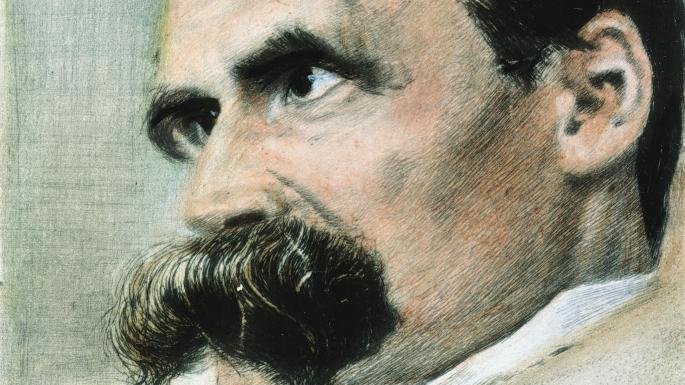
Nietzsche on morality without God and English flatheads
They are rid of the Christian God and now believe all the more firmly that they must cling to Christian morality. That is an English consistency; we do not wish to hold it against little moralistic females a la Eliot. In England one must rehabilitate oneself after every little emancipation from theology by showing in a veritably awe-inspiring manner what a moral fanatic one is. That is the penance they pay there.
We others hold otherwise. When one gives up the Christian faith, one pulls the right to Christian morality out from under one’s feet. This morality is by no means self-evident: this point has to be exhibited again and again, despite the English flatheads. Christianity is a system, a whole view of things thought out together. By breaking one main concept out of it, the faith in God, one breaks the whole: nothing necessary remains in one’s hands. Christianity presupposes that man does not know, cannot know, what is good for him, what evil: he believes in God, who alone knows it. Christian morality is a command; its origin is transcendent; it is beyond all criticism, all right to criticism; it has truth only if God is the truth–it stands or falls with faith in God.
When the English actually believe that they know ‘intuitively’ what is good and evil, when they therefore suppose that they no longer require Christianity as the guarantee of morality, we merely witness the effects of the dominion of the Christian value judgment and an expression of the strength and depth of this dominion: such that the origin of English morality has been forgotten, such that the very conditional character of its right to existence is no longer felt. For the English, morality is not yet a problem.
– Friedrich Nietzsche, Twilight of the Idols
One cannot pull out the main concept without breaking the whole. An almost universally overlooked insight, but just as true nonetheless.
(And that mustache is stunning.)